AI Agent Development Services & Multi-Agent Architecture

Autonomous agent architecture is the design of AI ecosystems that reason about goals independently, utilize API tools through function calling, and learn from errors rather than relying on static command chains. Transcending traditional automation, these multi-agent orchestration systems employ a supervisor agent that coordinates specialized planner, executor, and validator sub-agents via standardized 2026 protocols like Google's A2A or Anthropic's MCP. This allows them to complete complex enterprise workflows with unprecedented autonomy and self-reflection, minimizing operational error margins in mission-critical environments.

The Agentic Vision

Evolution to Agentic Architecture

Static instructions are giving way to dynamic agentic workflows. These systems self-solve when encountering errors, make autonomous API calls across boundaries, and complete complex business operations with professional precision through advanced automation coding.

Technical Competencies

I transform your business processes by deploying multi-agent orchestration, self-reflection loops, complex tool-use capabilities, and autonomous decision mechanisms governed by strict human-in-the-loop policies.

Hybrid Neuro-Symbolic Integration

The transition from monolithic large language models to swarm intelligence is here. I architect systems where multiple specialized agents collaborate efficiently, combining neural creativity with classical symbolic logic for predictable, reliable actions.

Distributed Protocol Mastery

I utilize the latest 2026 communication standards. Whether leveraging the Agent-to-Agent protocol for direct peer interaction or the Model Context Protocol for secure external tool access, your architecture remains highly interoperable.

The Agent Philosophy

Go beyond traditional automation. I design professional agent hierarchies that do not merely follow commands. They reason about goals, use tools iteratively, and supervise each other. Integrated with custom artificial intelligence solutions, these orchestrated swarms deliver scalable intelligence entirely native to your business processes.

Software should not just run; it should think. Systems capable of overcoming obstacles on the way to their goal and devising their own contingency plans represent the digital workforce of the future.
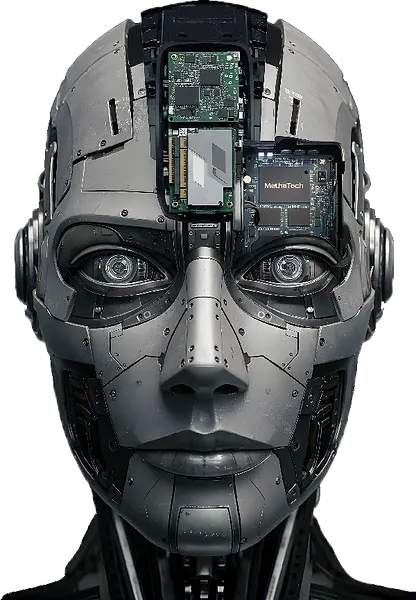
AI Agent Development Services & Multi-Agent Architecture

What You Will Gain

  • Autonomous Decision Making. Start the process and let the specialized agents execute contextual decisions under secure guardrails.
  • Adaptive Error Tolerance. When a system encounters an anomaly, self-healing cognitive loops immediately trigger recovery actions.
  • Scalable Swarm Intelligence. A highly flexible architecture that scales instantly from a single task to thousands of parallel operations.

Frequently Asked Questions

What exactly is autonomous agent architecture?
It refers to AI systems that independently reason about goals, select appropriate tools, and make targeted decisions instead of awaiting step-by-step instructions. By 2026, over forty percent of enterprise applications have embedded task-specific AI agents.
How do multi-agent systems coordinate work?
I use the Supervisor and Specialists paradigm. A central orchestrator agent manages specialized sub-agents. With distinct planner, executor, and validator roles, it mirrors human organizational structures. Each agent maintains deep expertise in its designated domain.
Do these agents operate completely independently?
No. A human-in-the-loop approach remains highly critical. I integrate human approval checkpoints for sensitive decisions, clear escalation pathways for errors, and continuous audit mechanisms. Fully autonomous operation without human oversight is actively discouraged in production environments.
Which business processes benefit most from agent architecture?
Document processing, data reconciliation, dynamic B2B purchasing, customer service, and supply chain management. Any multi-step process requiring contextual decisions and cross-system coordination is highly ideal. Back-office and intelligent procurement automation currently yield the highest measurable return on investment.
How is security governed within these systems?
Decentralized specific identities for agents, the principle of least privilege, immutable audit trails, and strict compliance with the EU AI Act are completely standard. I limit each agent strictly by its permission level, protecting access to critical enterprise systems through layered security checkpoints.
What are AI agent development services?
AI agent development involves creating autonomous software entities that do not just generate text, but take decisive action. An agent can research a topic, write code, execute API calls, evaluate its own success, and retry until it achieves the exact goal you defined.
How do multi-agent systems work?
A single AI model has operational limits. I design multi-agent architectures where specialized AI entities collaborate. One agent acts as a planner, another writes the data, and a third acts as a rigorous quality controller to prevent errors before final execution.
Are autonomous AI agents secure for enterprise use?
Security relies strictly on architectural guardrails. I implement hardened 'human-in-the-loop' checkpoints for sensitive actions like financial transfers or database deletions. The agents operate with absolute autonomy only within the precise limits defined by the enterprise.
What is the business value of agentic workflow design?
Traditional automation fails when a variable changes. Agentic workflows dynamically adapt to unexpected variables because they possess cognitive reasoning. They replace rigid scripts with thinking digital workers.